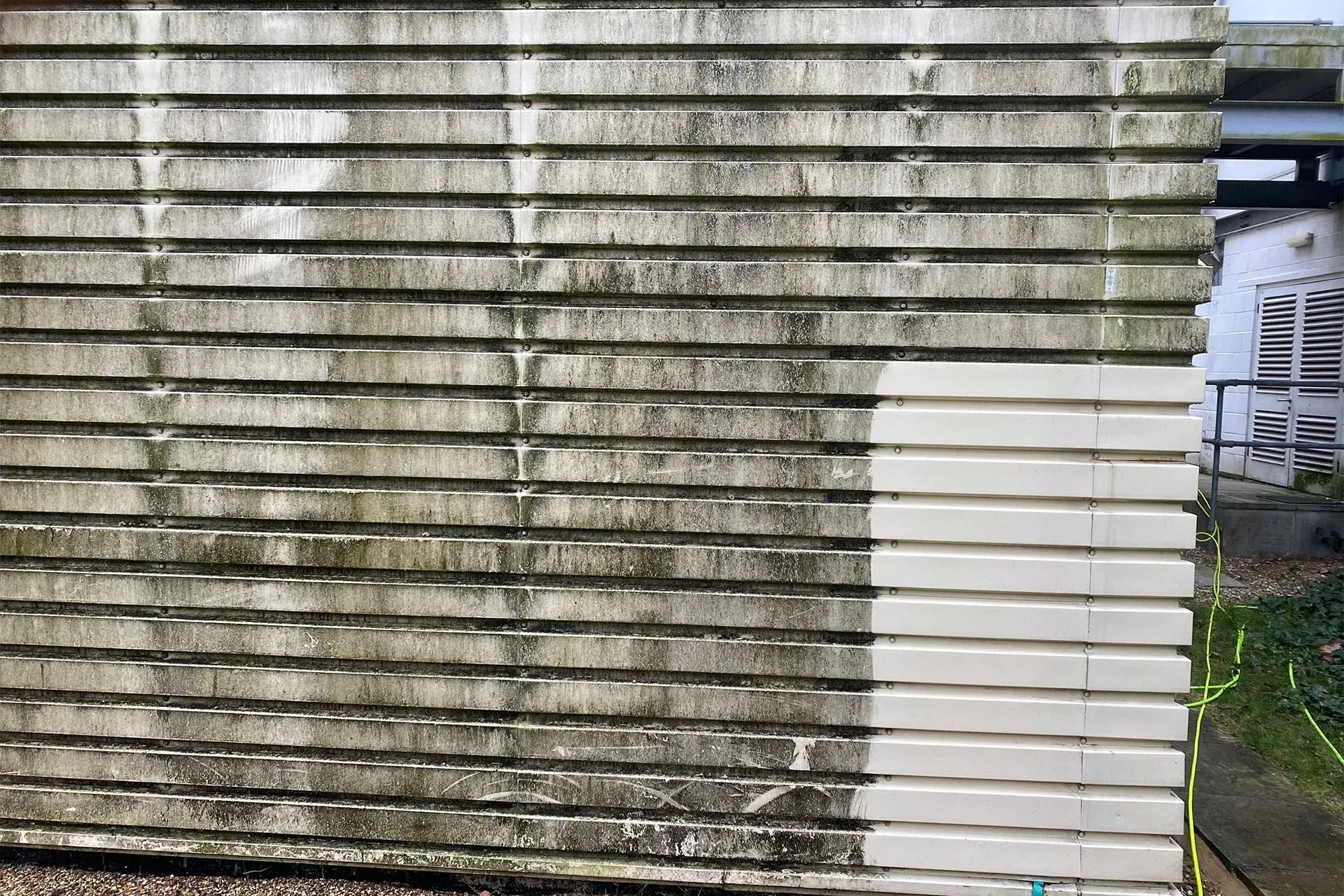
Algae, pollution and salt staining don't just look bad - left untreated they shorten a cladding system's life and can void manufacturer warranties. This guide covers how DMC FM assesses, cleans and maintains render, metal, timber and composite cladding across homes, offices and industrial sites, from method selection through to access and cost.
Ready to transform your property?
Get a free, no-obligation quote tailored to your needs.
Cladding does a lot of quiet work protecting a building, but it takes a visible battering from weather, pollution and plant growth in the process. This guide covers why cladding gets dirty, how different materials should be cleaned, what a professional process looks like, and how to choose the right contractor — with practical detail from DMC FM's own cladding and facade cleaning work across homes, offices and industrial buildings.
What Is Cladding Cleaning and Why It Matters
Cladding cleaning is the process of removing dirt, algae, moss, pollution residue and staining from a building's external skin without damaging the material underneath or the substrate it protects. It sounds cosmetic, but it isn't — cladding is a weatherproofing layer first and a visual finish second, and neglecting it lets both jobs suffer.
Left uncleaned, biological growth and trapped grime hold moisture against the cladding surface for longer than the material was ever designed to tolerate. That accelerates coating breakdown on metal panels, rot in timber, and staining that etches into render and stone rather than sitting on top of it. A clean isn't just about appearance; it's a maintenance intervention that protects the building envelope.
DMC FM treats cladding cleaning as a distinct discipline from general exterior cleaning, because the material, the access method and the building type all change the approach. A timber-clad new-build in a residential estate is a different job to a zinc rainscreen system on a three-storey office block, and getting the method wrong on the wrong material causes damage that's expensive to put right.
Signs Your Cladding Needs Cleaning
Algae, Moss and Black Streaking
Green and black discolouration is the most common reason cladding gets flagged for cleaning. Algae favours damp, shaded elevations — typically north-facing walls, areas beneath overhangs, and anywhere airflow is restricted. Black streaking, often mistaken for pollution staining, is frequently a form of algae (Gloeocapsa magma) that clings to panel joints and takes hold fastest where water runs slowly down a façade.
Grime, Pollution and Salt Spray Build-Up
A dull, grey film across a whole elevation is usually a mix of airborne particulates, traffic pollution and general atmospheric grime. It builds gradually enough that owners often don't notice until a cleaned panel is held up against a dirty one for comparison. In coastal or exposed rural settings, salt deposits contribute to the same dulling effect and can be more abrasive over time than urban grime alone.
Staining From Guttering, Render and Sealant Failure
Vertical brown or rust-coloured streaks below joints usually point to a failing gutter, a blocked downpipe, or a sealant joint that's let water track down the face of the cladding rather than away from it. This type of staining is a useful early warning sign — it often means there's a drainage fault worth investigating alongside the clean itself, rather than a purely cosmetic issue.
What Causes Cladding to Get Dirty
Weather Exposure and Building Orientation
Elevations facing prevailing wind and rain take the heaviest deposit of airborne dirt, while sheltered or shaded elevations are more prone to algae and moss because they dry out more slowly. Understanding a building's orientation before cleaning helps predict which panels need the most attention and which are likely to need it again soonest.
Urban Pollution and Traffic Grime
Buildings near busy roads accumulate a fine layer of exhaust particulates and brake dust that binds to cladding surfaces, particularly texture-heavy render and stone finishes. This is a common issue on commercial premises fronting main roads and retail parks, where kerb appeal matters most but pollution exposure is highest.
Coastal and Salt Air Effects
Salt-laden air corrodes unprotected metal fixings, dulls painted finishes and accelerates the breakdown of sealants faster than inland exposure. Buildings within a few miles of the coast typically need more frequent cleaning cycles to stay ahead of the damage salt air causes.
Poor Drainage and Water Runoff
Poorly designed or blocked drainage — guttering, cills, and drip details — forces water down the face of the cladding instead of away from the building. This is one of the most preventable causes of staining, and it's why DMC FM flags drainage issues spotted during a clean rather than just cleaning around them.
Types of Cladding and How Each Should Be Cleaned
Timber and Wood Cladding
Timber is porous and finish-sensitive, so aggressive pressure washing risks driving water into joints and stripping protective coatings. Soft washing, combined with a gentle biocidal treatment for algae and moss, is the safer route, followed by resealing or re-oiling where the finish has worn thin.
Metal Cladding: Aluminium, Zinc and Stainless Steel
Metal panel systems are generally durable but can scratch, streak or corrode if cleaned with abrasive tools or the wrong chemical dilution. Low-pressure washing with pH-neutral detergents, applied in the direction of the panel grain, keeps factory finishes intact and avoids voiding coating warranties.
uPVC Cladding
uPVC tolerates a firmer clean than timber or painted metal but still benefits from a controlled approach — pressure that's too high can force water behind panel joints. A soft wash or moderate jet wash with the right nozzle and standoff distance restores a bright, uniform finish without disturbing seals.
Brick, Stone and Render Cladding
These masonry-based finishes are the most forgiving of pressure but the least forgiving of the wrong chemicals, since some cleaning agents can bleach or etch natural stone and pigmented render. Biocidal pre-treatment followed by a measured wash typically gives the best result without altering colour or texture.
Composite and Rainscreen Panel Systems
Modern rainscreen and composite panel systems are engineered products with specific manufacturer cleaning guidance, and departing from it can affect fire-rated coatings or void warranties. DMC FM checks manufacturer specification where it's available before selecting a method, particularly on newer commercial and high-rise installations.
Cladding Cleaning Methods Explained
Soft Washing
Soft washing uses low pressure combined with a specialist cleaning solution to lift dirt and biological growth rather than blast it off. It's the default choice for timber, painted surfaces and older or more delicate cladding systems where high pressure risks physical damage.
Steam Cleaning
Steam cleaning uses high temperature rather than high pressure to break down grime and kill algae and mould spores, making it well suited to detailed areas, joints and surfaces where chemical use needs to be minimised — for example on food-facing commercial premises.
Pressure and Jet Washing
Pressure washing is effective and fast on robust materials like brick, stone and uPVC but is the method most likely to cause damage when used on the wrong surface. DMC FM calibrates pressure and nozzle choice to the specific material rather than running one setting across a whole building.
Chemical and Biocidal Treatments
Biocidal treatments target algae, moss and lichen at the root rather than just removing visible growth, which slows regrowth significantly compared with a wash alone. Dilution and dwell time matter here — too strong a mix on the wrong material can bleach or damage the surface it's meant to protect.
Choosing the Right Method for Your Material and Building Type
In practice, most jobs combine methods: a biocidal pre-treatment, a soft or steam wash calibrated to the material, and a final low-pressure rinse. The right combination depends on material, degree of soiling, building height and what access is available — which is exactly what the site survey is for.
Our Cladding Cleaning Process
Initial Assessment and Site Survey
Every job starts with a site visit to identify cladding material, assess soiling type and severity, check access constraints, and flag any drainage or sealant issues contributing to staining. This is also where DMC FM confirms the right access method and any working-at-height requirements before a date is booked.
Cleaning and Treatment Application
Cleaning is carried out using the method and pressure settings matched to the material — soft washing for timber and painted finishes, steam or pressure washing for masonry, and biocidal treatment where algae or moss is present. Panels or elevations are worked systematically to keep the finish consistent across the whole building.
Final Inspection and Quality Checks
Once cleaning is complete, elevations are inspected for missed areas, streaking, or any signs the cleaning process has affected the surface finish. Photos are taken as a record, which is particularly useful on commercial contracts where a client or facilities manager wants documented before-and-after evidence.
Ongoing Maintenance Advice
Every clean ends with practical advice on cleaning frequency, any drainage repairs worth arranging, and whether a maintenance contract would suit the property better than a series of one-off calls.
Benefits of Professional Cladding Cleaning
Protecting the Building Envelope and Extending Cladding Lifespan
Removing trapped moisture-holding grime and biological growth slows the deterioration of coatings, seals and the material itself, extending the useful life of a cladding system well beyond what neglect would allow.
Preserving Manufacturer Warranties
Many cladding systems, particularly composite and rainscreen panels, carry manufacturer warranties conditional on approved maintenance and cleaning methods. Using the wrong pressure, chemical or technique can invalidate cover that would otherwise protect a significant capital investment.
Improving Kerb Appeal and Property Value
A clean façade is one of the fastest, most cost-effective ways to lift a property's presentation — for a homeowner preparing to sell, or a commercial landlord marketing a unit to prospective tenants.
Preventing Long-Term Structural and Damp Issues
Persistent staining and trapped moisture can, over time, contribute to damp ingress and material breakdown that's far more costly to fix than routine cleaning. Catching drainage faults early during a clean is often the difference between a wash and a repair bill.
Residential, Commercial and Industrial Cladding Cleaning
Homes and Residential Developments
Residential cladding cleaning covers everything from timber-clad extensions to render and uPVC on newer housing developments, typically as part of a wider exterior clean alongside driveway cleaning or conservatory cleaning.
Offices, Retail and Warehouses
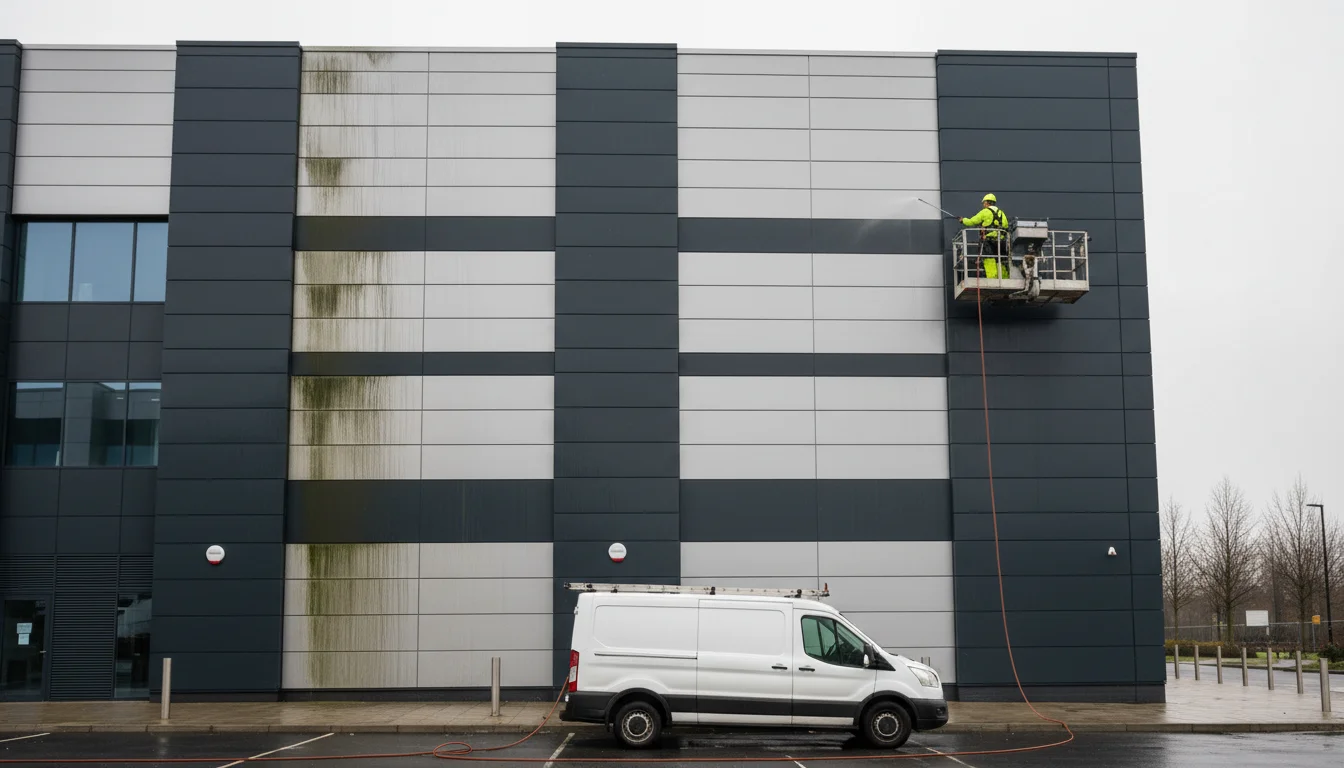
Commercial cladding cleaning is usually scheduled around business hours or out-of-hours access, and covers metal, composite and render systems on offices, retail units and warehouses where kerb appeal and drainage performance both matter.
Industrial and High-Rise Buildings
Larger industrial and multi-storey buildings bring access into the equation as much as the cleaning method itself, often requiring rope access, MEWPs or scaffolding rather than ground-based equipment.
Access Methods and Health & Safety
Rope Access and Abseiling
Rope access suits tall or complex buildings where scaffolding isn't practical, giving controlled, precise cleaning coverage across large elevations with minimal disruption to occupants below.
Cherry Pickers, MEWPs and Scaffolding
Mobile elevating work platforms and scaffolding are used where ground conditions and access allow, offering a stable working platform for sustained cleaning on mid-rise commercial and industrial buildings.
Working at Height Compliance and Risk Assessments
Every access method is backed by a documented risk assessment and method statement, particularly important on commercial and industrial sites where a client's own health and safety policy needs to be satisfied before work begins.
Choosing a Cladding Cleaning Company
Experience, Accreditations and Insurance
Look for a contractor with public liability insurance appropriate to the building type, and direct experience with the specific cladding material involved — a good track record on timber doesn't automatically translate to composite rainscreen systems.
Equipment and Specialist Techniques
Purpose-built soft washing and steam equipment, calibrated pressure systems and biocidal treatments matched to material type separate a specialist cladding cleaner from a general pressure washing service.
Eco-Friendly and Environmentally Responsible Cleaning
Responsible cladding cleaning means using biodegradable detergents where possible, controlling run-off near drains and watercourses, and using pure water systems for lower-level work where chemical use can be minimised altogether.
Getting a Free Survey and Quote
A proper quote should follow a site survey, not replace it — material, soiling level, access and building height all affect price, and none of those can be assessed accurately from a photo alone.
How Much Does Cladding Cleaning Cost?
Factors That Affect Pricing
Cost is driven primarily by building size, cladding material, degree of soiling, and access method — a ground-level residential job with straightforward access costs considerably less than a high-rise elevation requiring rope access or a MEWP hire. Other factors include the number of elevations, whether biocidal treatment is needed, and how far the property is from base.
| Factor | Lower cost | Higher cost |
|---|---|---|
| Access | Ground-level, straightforward | Rope access, MEWP or scaffold hire |
| Material | uPVC, brick | Composite, timber requiring resealing |
| Soiling | Light grime | Heavy algae, staining, drainage repair |
| Building height | Single storey | Multi-storey / high-rise |
One-Off Cleans vs Scheduled Maintenance Contracts
A one-off clean tackles existing build-up, but regrowth and re-soiling are ongoing once the surface is clean again. A scheduled maintenance contract — cleaning at set intervals rather than waiting for visible staining to return — typically works out more cost-effective over time than repeated one-off call-outs, particularly for commercial clients with kerb appeal to maintain year-round.
Cladding Cleaning Frequency and Maintenance Planning
Recommended frequency depends heavily on exposure: a sheltered, inland residential property might only need attention every couple of years, while a coastal or heavily shaded commercial elevation can need cleaning annually to stay ahead of algae regrowth and salt deposit build-up. Industry surveys typically report that biocidal treatment extends the interval between cleans compared with a wash alone, because it addresses regrowth rather than just visible soiling.
A simple way to plan maintenance is to align it with other exterior work — a cladding clean scheduled alongside pressure washing or gutter clearance means access equipment and site visits aren't duplicated. For commercial clients, tying cladding cleaning into a wider facilities maintenance schedule also keeps the cost predictable rather than reactive.
Service Coverage and Areas Served
DMC FM is based in Leighton Buzzard, and residential cladding cleaning is available within roughly a 30-minute radius of the base — covering Leighton Buzzard itself, Wing, Dunstable, Houghton Regis, Bletchley, Woburn Sands, Tring, Luton, Milton Keynes, Aylesbury, Newport Pagnell, Winslow, Hemel Hempstead and Berkhamsted.
Commercial and industrial cladding cleaning is offered UK-wide, reflecting the scale of equipment and access planning that larger contracts typically require. Get in touch via a free survey and quote request to confirm coverage and timescales for a specific property.
Frequently Asked Questions About Cladding Cleaning
How often should cladding be cleaned? It depends on exposure — sheltered residential properties may only need cleaning every couple of years, while coastal, shaded or heavily trafficked commercial elevations often benefit from annual attention.
Will pressure washing damage my cladding? It can, if the pressure and technique aren't matched to the material — timber and painted metal are particularly vulnerable, which is why soft washing is usually the safer default.
Can cladding cleaning remove black streaking permanently? Cleaning removes existing staining, but a biocidal treatment is needed to slow regrowth of the algae that typically causes it — without treatment, streaking tends to return within a season or two.
Do you clean cladding on occupied buildings? Yes — commercial jobs are routinely scheduled around business hours or out-of-hours access to minimise disruption to staff, tenants or the public.
Is cladding cleaning covered by a warranty? Cladding cleaning itself isn't a warranty item, but using an approved method protects the cladding manufacturer's own warranty, which can be invalidated by incorrect pressure or chemical use.
How do I get a quote? A free site survey is the starting point — request a quote and DMC FM will assess material, access and soiling level before providing a price.
Ready to get started?
Contact our team today for a free, no-obligation consultation.